On this page
- First, identify the use
- A link points to the work
- Republication reproduces expression
- AI use can describe different steps
- Copyright and proof in Canada
- Keep a useful record of your article
- Make the record before you need it
- Assess the activity, not just the label
- Sources
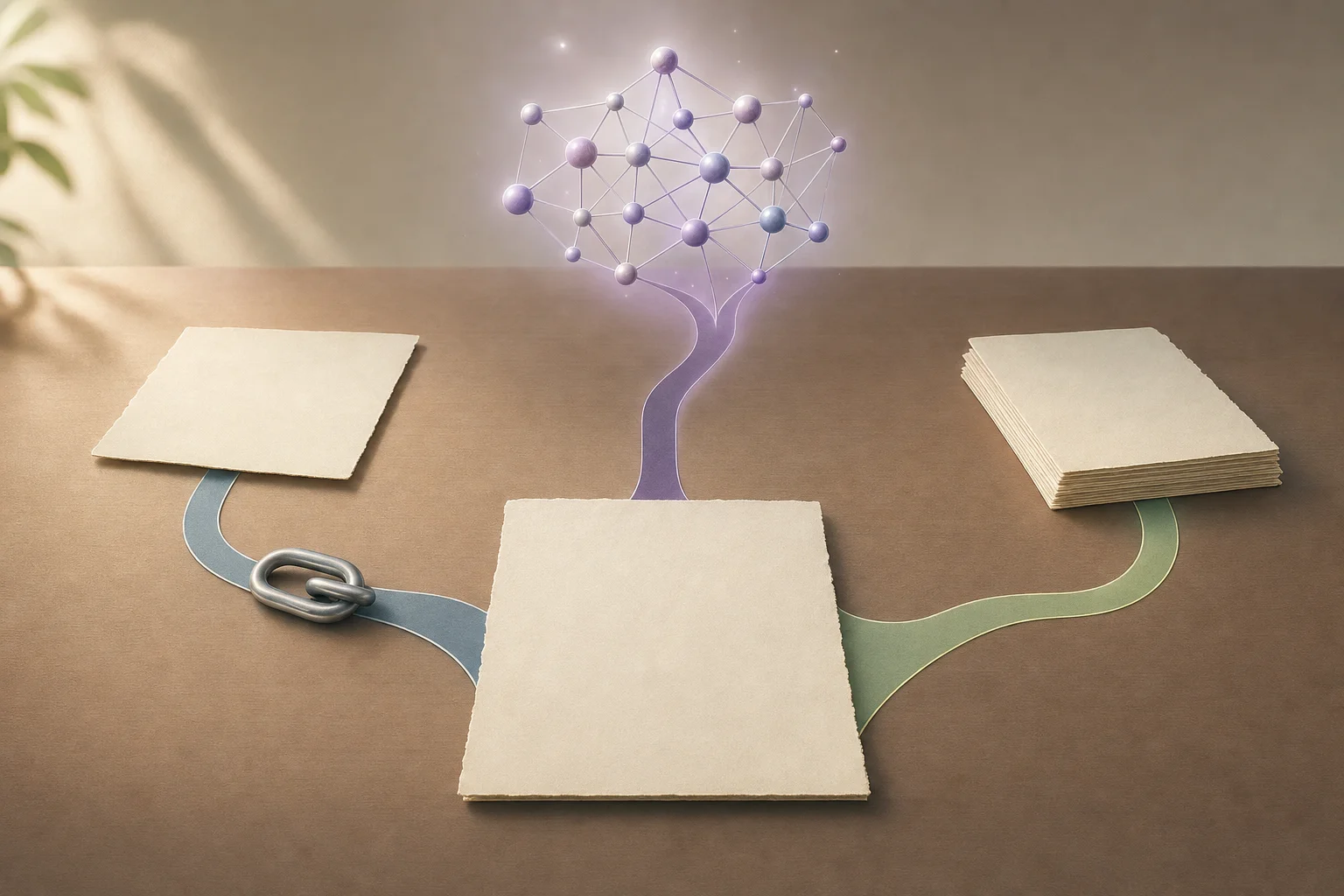
A link, republication and AI-related use each call for a closer look at what happened.
A post points readers to your article. Another site reproduces several paragraphs. An AI system draws on online material or displays similar wording. These situations involve different activities, so start by asking what was actually used—not simply whether your work appeared elsewhere.
Keeping a clear record of your writing, publication history and permissions can help you explain what you created and what uses you allowed.
First, identify the use
A link points to the work
A clickable address directs readers to a page; it is not the same thing as placing the article’s full text on another site. Look at what appears with the link, too. A copied headline, image or preview is separate material to consider.
Republication reproduces expression
When another publisher includes your wording, identify the passages that appear and check any agreement or licence that may apply. A credit line or link back to your page does not, by itself, provide permission.
Not every reuse is necessarily unauthorized. In Canada, fair dealing for criticism or review can permit an excerpt when the source and author are identified. The amount used must be fair in relation to the purpose; that does not make reproducing an entire article automatically acceptable.
AI use can describe different steps
Try to pin down what “used by AI” means. Was the article collected for training, retrieved in response to a question, or reproduced in an answer? These are distinct activities. A passage that resembles your writing in an output does not, on its own, show how the system obtained it.
Copyright and proof in Canada
In Canada, copyright in an original work begins automatically when the work is created. You do not need to complete a formality for protection to start. Copyright applies to the way an idea is expressed, rather than to the idea itself.
Registration is optional: it does not create copyright. A dated deposit with an independent service can help show who authored a work and that it existed by a particular date. If a dispute arises, evidence of an earlier date can matter. Keep the certificate with the version of the work that was deposited.
Keep a useful record of your article
Bring together records that can show which version you wrote, when it was published and what uses you authorized. Save the submitted manuscript separately from the published copy, and retain earlier drafts when you revise the article.
- Writing history: Keep drafts, notes, revision records and contributor details.
- Publication: Save the final text, byline, page address and publication or update information.
- Permissions: Retain licences, agreements and relevant correspondence. Describe each permitted use clearly, including whether it covers excerpts, full republication or AI-related activities.
- Deposit: Store the deposited file and its dated certificate together.
- Possible reuse: Record the material you found, where it appeared and when you observed it. Note the specific wording or other elements that match.
If you find a possible copy, preserve what you observed before contacting the other party. Keep observations separate from assumptions, especially when trying to determine whether an AI system accessed or reproduced your work. For a significant dispute, seek advice from a qualified Canadian professional about the facts, agreements and applicable law.
Make the record before you need it
A dated certificate can be one part of a broader publication record: drafts show how the work developed, publication records show where it appeared, and agreements help explain what was authorized. No single record answers every question, but keeping these materials together makes the history easier to establish.
Use Scopyright.ca to deposit your work online and receive a dated certificate supporting evidence of authorship and date. Explore copyright protection and registration options in Canada.
Assess the activity, not just the label
Linking to an article, reproducing its text and using material in connection with AI are not interchangeable. Identify the activity, review your permissions and keep reliable records of the work and its versions.
Sources
Article written with the assistance of AI. General information, not legal advice.
Quiz
Test your knowledge
Three short questions on Canadian copyright. You'll see why as soon as you pick an answer.