On this page
- Start with a reliable timeline
- Keep the work and its history together
- Record who contributed and what was agreed
- Preserve examples of use in context
- Describe cross-border details carefully
- Copyright and proof in Canada
- Use a dated deposit as part of the record
- Check the file before taking action
- Make your authorship easier to trace
- Sources
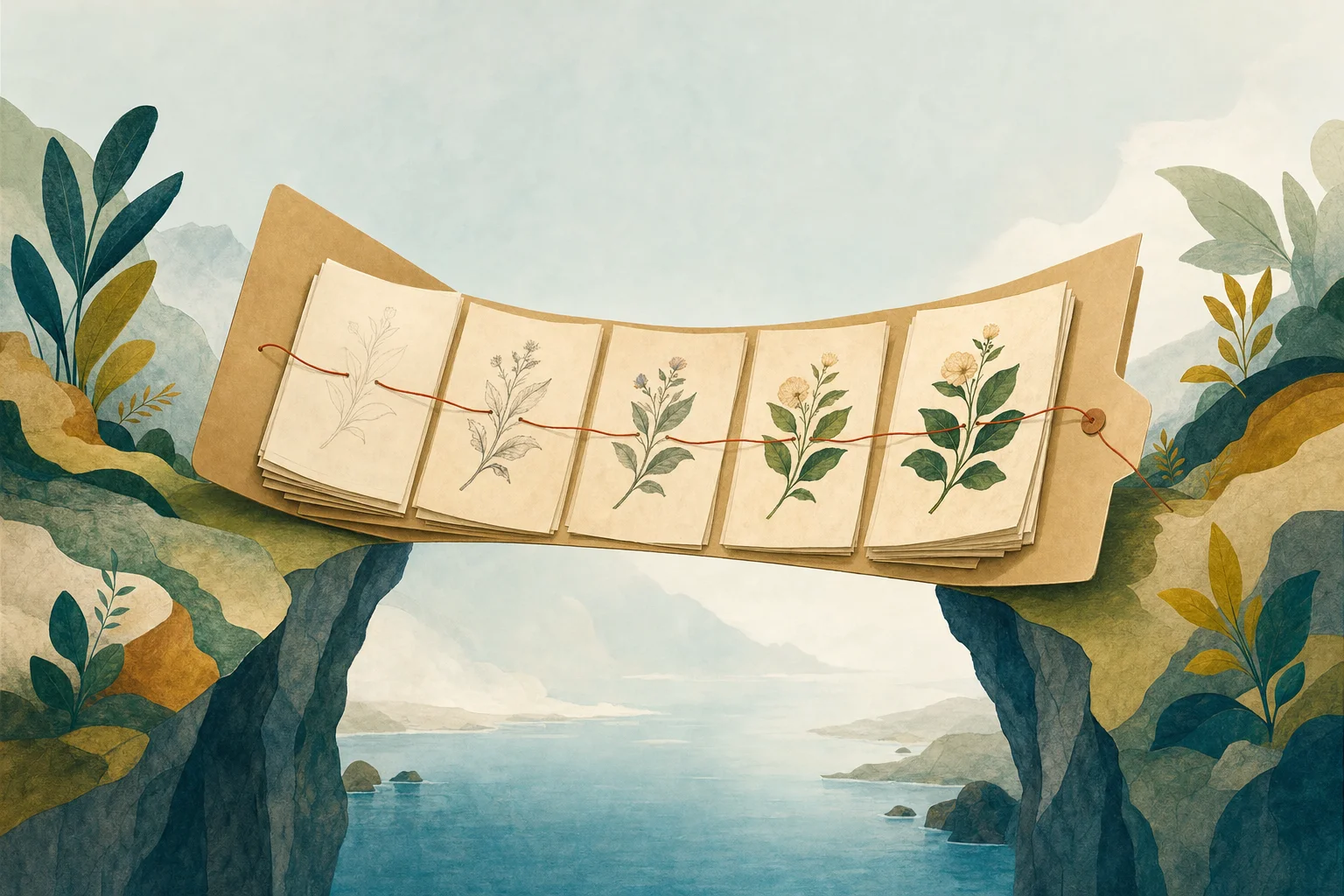
A connected record of versions and dates can help tell the story of a work across borders.
A project may involve contributors in several places, reach audiences abroad or appear online in a form you did not expect. If questions arise about who created it or when it existed, a clear, well-organised record can help you explain the history of your work.
Build that record as you create and share the work. Keep relevant versions, contributor information, agreements and dated evidence together, so someone new to the project can follow the sequence of events.
Start with a reliable timeline
Make a chronology that distinguishes drafting, completion, delivery, publication, revisions and deposit. For each event, note what supports the date, such as a message, delivery receipt or publication record. Include time-zone details where available.
Label important versions consistently and keep the exact file associated with each event. If you make a substantial revision, retain the earlier version too. A deposit date identifies when that version was deposited; it does not, by itself, verify an earlier creation date you have claimed.
Keep the work and its history together
Preserve the original working file along with a copy that is easy to view. Depending on the project, useful materials might include drafts, sketches, raw photographs, recordings, research notes or version histories. Keep preserved originals separate from files you edit for comparison or presentation.
Identify the version you delivered, published or deposited. A short note can describe your creative contribution and identify third-party material incorporated with permission. For example, if a design has both an early draft and a revised version prepared for a client, keep both rather than relying only on the final file.
Record who contributed and what was agreed
Make a note of each contributor and the parts they worked on. Keep relevant correspondence, employment documents, contributor agreements, assignments and licences with the project record. A payment or transfer of a file does not, on its own, tell you what rights were agreed.
If you grant permission to use your work, keep the agreement with the version supplied. Record the material covered, permitted uses, territory, duration and any exclusivity terms. Flag unclear wording or missing documents for review before relying on them.
Preserve examples of use in context
If you notice a possible unauthorised use, record the full web address, the date you captured it, the relevant account and the surrounding page. Keep an untouched capture separate from any marked-up comparison, and note the specific parts that appear to correspond to your work.
For an AI-generated response, retain the complete prompt and response, the session context, the date and any product or model identifier shown. Describe what you observed; a similar output alone does not establish where it came from. Preserve only material you can access lawfully, without bypassing access controls.
Describe cross-border details carefully
Keep verifiable information about the parties, contracts, publication arrangements and locations where you observed the work being used. Save relevant website terms and licensing correspondence. If you do not know a fact, mark it as unknown instead of guessing—for example, a domain name does not establish where a server is located.
For advice, prepare a short factual summary: who created the work, who claims the relevant rights, what use you observed, and when and where you saw it. A qualified lawyer can advise which further records may be appropriate and how the law applies in the relevant places.
Copyright and proof in Canada
In Canada, copyright protection for an original work begins when the work is created; no formality is needed to create the right. Registration is optional. A dated deposit does not create copyright, but it can help you show that you are the author and that the work existed on a particular date.
Keep the dated certificate with the exact version deposited and your supporting records. In a dispute, proving an earlier date can give you an advantage. A certificate is evidence to support your account, not a guarantee of a legal outcome.
Use a dated deposit as part of the record
Scopyright.ca lets you deposit your work online and receive a dated certificate. Keep it alongside the deposited version, drafts and records of authorship so the materials form a connected account of your work’s development and dates.
The deposit is a means of proof, not the source of copyright. Its place in a broader evidence file is most useful when you can readily identify the deposited version and connect it with other project records.
Check the file before taking action
- Can another person find the items referred to in your timeline?
- Are original records separate from edited comparisons?
- Have you clearly identified missing documents and uncertain details?
- Is a secure backup available to the people who need it?
Before alleging infringement, review who holds the relevant rights, what permissions apply and whether an exception may be relevant. Keep observations distinct from legal conclusions, and consider getting advice about the applicable law, deadlines and possible responses. Preserve the material before asking for it to be removed.
Protect your work with a dated deposit through Scopyright.ca and keep the certificate with the version you submitted. Explore copyright protection options in Canada.
Make your authorship easier to trace
Organise your records while the project is underway, rather than waiting for a dispute. A clear chronology, supporting documents and dated certificate can help you explain your work, review permissions and seek informed advice when it is used across borders.
Sources
Article written with the assistance of AI. General information, not legal advice.