On this page
- Start with a clear inventory
- Keep the history attached to each image
- Choose filenames you can match to the index
- Record who contributed and who owns the rights
- Track dates separately
- Protect the files behind the finished images
- Copyright and image collections in Canada
- Collection review before you deposit
- Sources
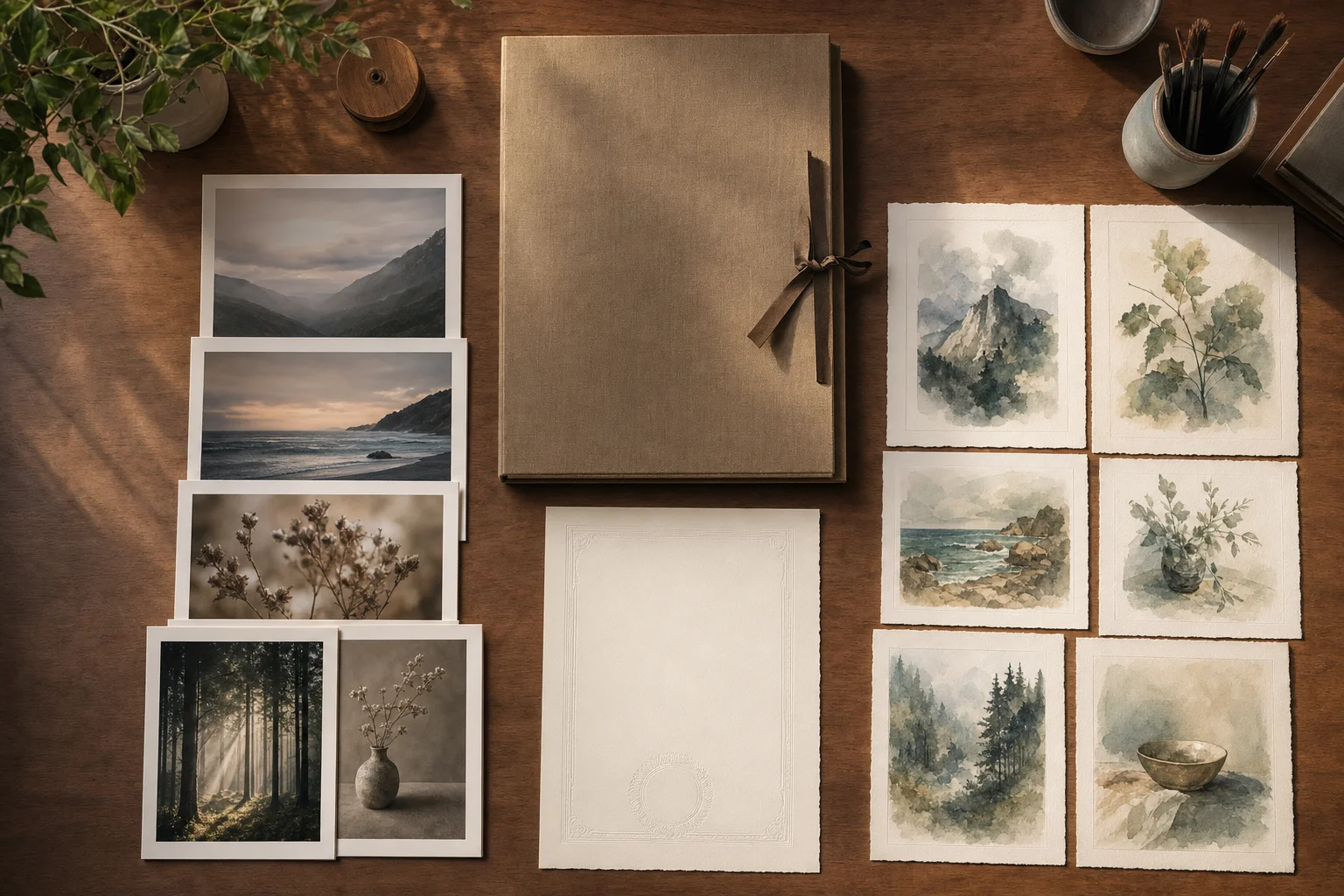
A clear inventory and preserved files help keep an image collection’s history organized.
A well-organized image collection should make it easy to answer basic questions: who made each photograph or illustration, which version is included, and when did it exist? A reliable record helps you keep those details together as a project grows.
You can build that record with a consistent inventory, identifiable filenames and preserved working files. The goal is a useful history of the collection, not extra paperwork for its own sake.
Start with a clear inventory
Give each group of images a descriptive name and decide what belongs in it. A collection might cover one photography assignment, a set of commissioned illustrations or a particular stage of a project.
List every included item in an index. For each one, note its title or short description, exact filename, creator, preferred credit, and the version you are keeping. Use separate entries for photographs and illustrations, and make different creators or rights owners easy to distinguish.
Keep the history attached to each image
Choose filenames you can match to the index
Use a repeatable pattern with a project name, image type, item number and version. For example, coastal-walk_photo_014_v02.jpg or coastal-walk_illustration_006_v01.png. These are sample names, not required formats. Avoid labels such as “final” that could become unclear when another version is made.
Copy each filename into the inventory exactly as it appears on the file. When a work changes substantially, identify the revised version separately rather than replacing the record of the earlier one.
Record who contributed and who owns the rights
Keep authorship details distinct from ownership details. Note each creator’s contribution, the name they want used for credit, the current rights owner and any relevant agreement. For collaborative work, describe who did what and keep related contracts and permissions with the project records.
Track dates separately
Use different fields for the date a work was completed, any relevant first-publication date and the date it was deposited. Keep material that supports an earlier creation date, such as sketches, working files, camera originals or project correspondence.
If you are unsure when an image was completed, record that uncertainty rather than treating an estimate as confirmed. Keep notes about where and how a work was released, too.
Protect the files behind the finished images
Retain original photographs, layered illustration files, sketches and relevant correspondence alongside the finished exports. Before making a deposit, check that the files listed in your inventory are present, open correctly and match the versions described.
After depositing a collection, keep the dated certificate with an unchanged copy of the submitted files and the inventory. Store backup copies so you can refer to the earlier version and its history if the collection is later updated.
Copyright and image collections in Canada
In Canada, copyright protects an original photograph or illustration automatically from the moment it is created; you do not need to register it for protection to begin. Copyright covers the way an idea is expressed, not the idea itself. A dated deposit does not create copyright, but can help show who created the work and when it already existed.
Registration with the Canadian Intellectual Property Office is optional. A CIPO certificate is evidence that copyright exists and that the registered person owns it, while a dated filing can help prove that a work existed on a particular date. Keeping authorship information and the relevant version together makes that evidence easier to understand.
Collection review before you deposit
- Give the collection a distinct name and scope.
- Make an inventory that accounts for every file.
- Record creator, credit and rights-owner information separately.
- Keep completion, publication and deposit dates distinct.
- Preserve original files, supporting records and relevant agreements.
- Retain the deposited version, inventory and certificate together.
Protect your photo and illustration collection with a dated deposit through Scopyright.ca’s photo registration service. You can also explore copyright protection options in Canada and keep proof of authorship and date with your records.
Sources
Article written with the assistance of AI. General information, not legal advice.